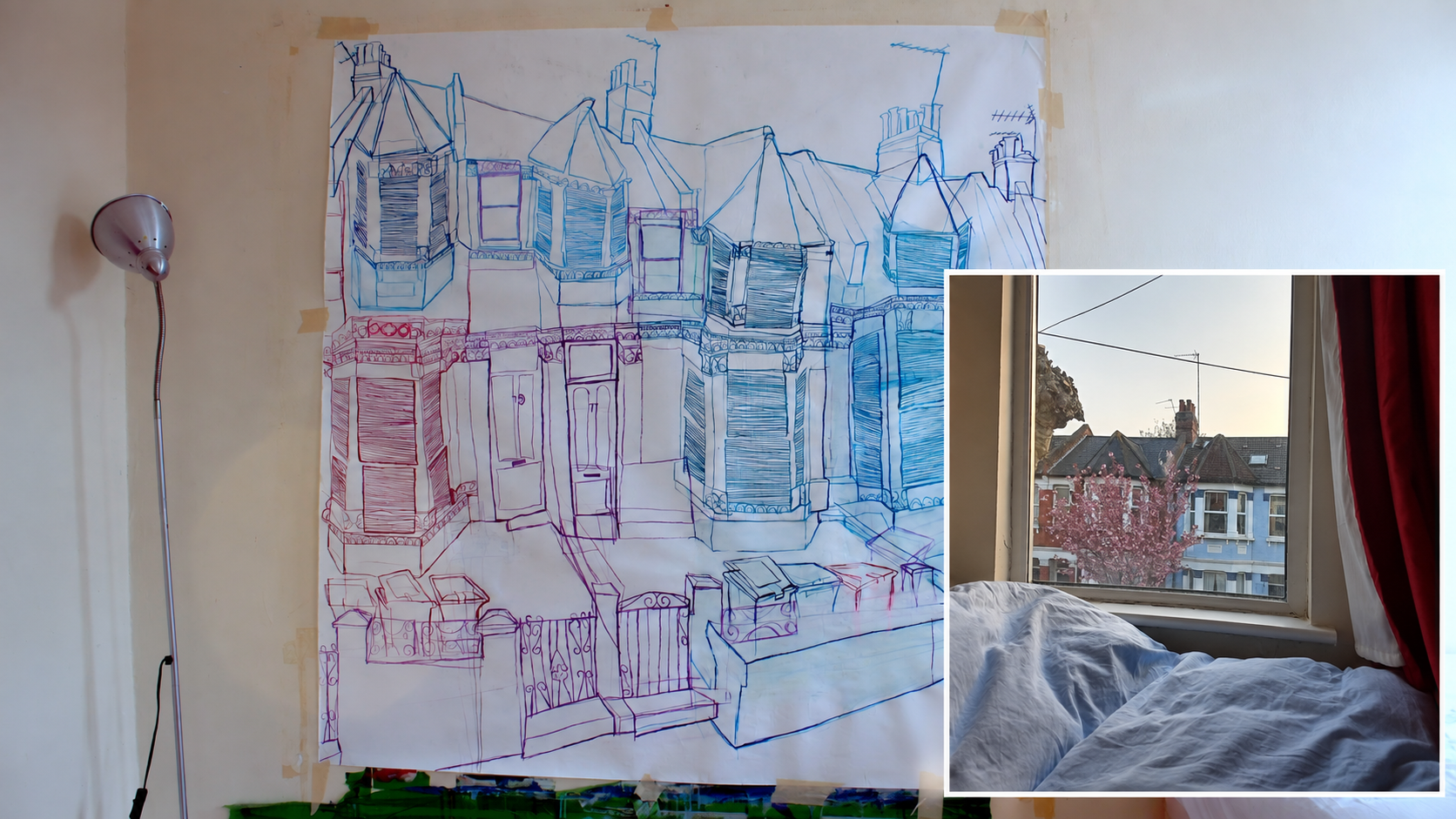
The View from My Window —Larch Rd, London, Cricklewood, 2017
Every morning, before I was properly awake, I opened my eyes to the same row of houses opposite my bedroom window in Cricklewood, North London.
In those first few minutes I wasn't really studying them. I was still half asleep, looking almost without thinking. But the houses were always there — the bay windows, rooftops, chimneys, gates and all the small architectural details. Seeing them every morning meant that, almost without noticing, I became increasingly familiar with them.
Over time, I started paying more attention. I noticed the differences between each façade, the rhythm created by the windows and roofs, and the way the houses seemed to press closely against one another. The more familiar the view became, the less ordinary it felt.
In 2017, that repeated act of looking developed into this large coloured pencil drawing on paper, measuring 150 × 150 cm. Working at that scale allowed me to transform something completely everyday into an image with a much stronger physical presence.
The lines move between blue, purple, pink and red, building the architecture through overlapping marks rather than precise description. The perspective shifts slightly, the buildings bend and some details become exaggerated. The drawing was never meant to be an exact record of the street. What interested me was how looking at the same place every day had started to change the way I saw it.
Looking at the drawing now, I can recognise ideas that continue to appear in my work: closed windows, hidden interiors and the suggestion of lives taking place just out of view. There are no figures, but there is still a sense of human presence behind the architecture.
In the end, the drawing became less about the houses themselves and more about familiarity, memory and the strange way an ordinary view can slowly acquire emotional weight.
Cricklewood, North London, 2017
Coloured pencil on paper
150 × 150 cm
You can also explore more original drawings in the Artwork and Shop sections.
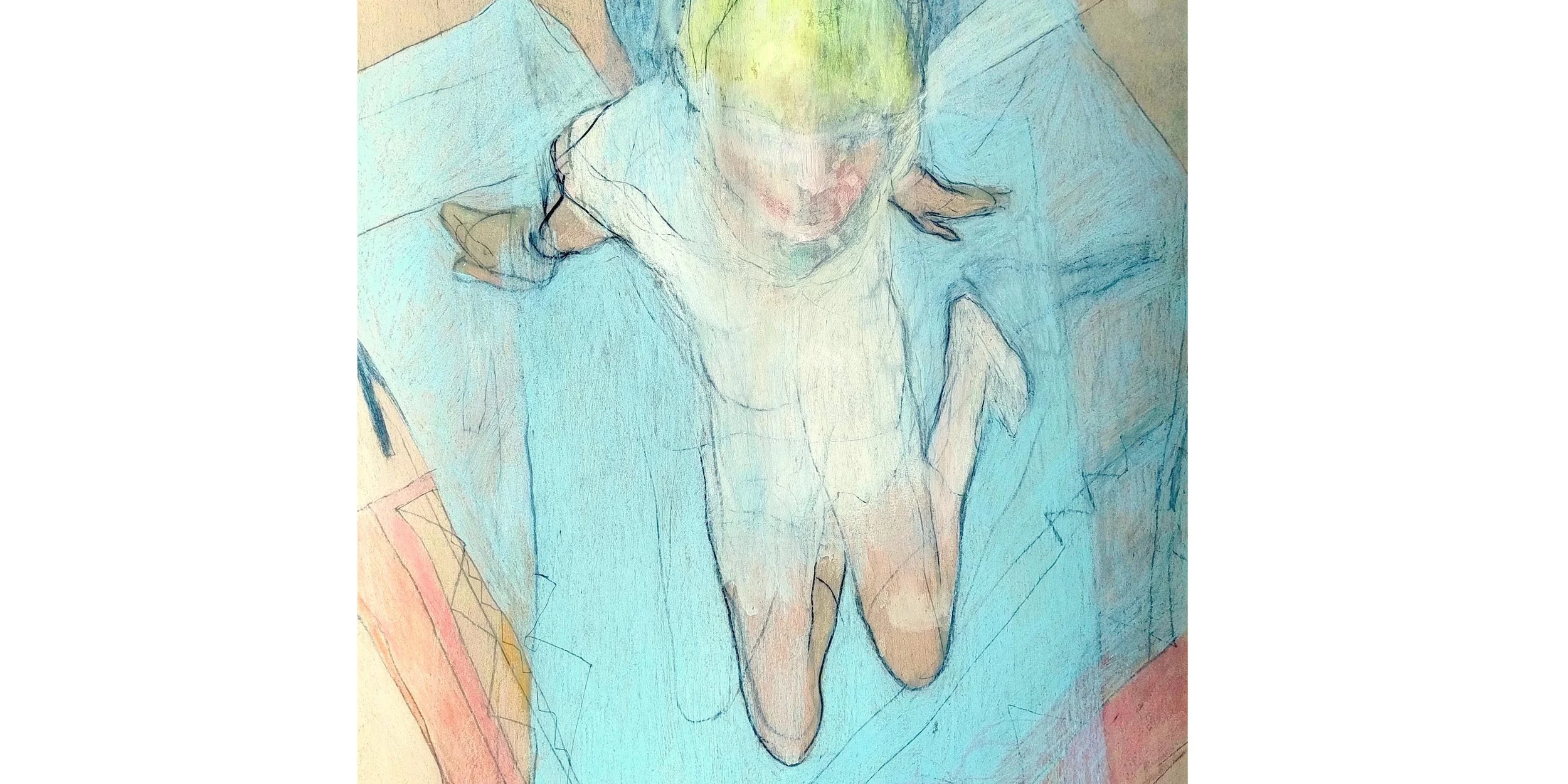
Somewhere in Between (2026)
Somewhere in Between began during a life drawing session and was finished later, away from the model, working from memory.
Even with the model in front of me, I felt a pull to let the figure come apart — to draw it only to watch it disappear again. Certain areas resisted: a hand, the knees, fragments held together by firmer lines, as though trying to stay anchored while everything else grew uncertain.
When I returned to the drawing later, the space itself became an active part of that process. No longer just a container for the figure, it began to press in, distort, and absorb it. What had been familiar shifted into something stranger — a domestic space turning mental, transitional, somewhere between the real and the imagined.
Perhaps that's what draws me in most: this unstable state of being there without being entirely there — a figure appearing and withdrawing at once, held briefly by a few persistent lines before dissolving again.
You can also explore more original drawings in the Artwork and Shop sections.
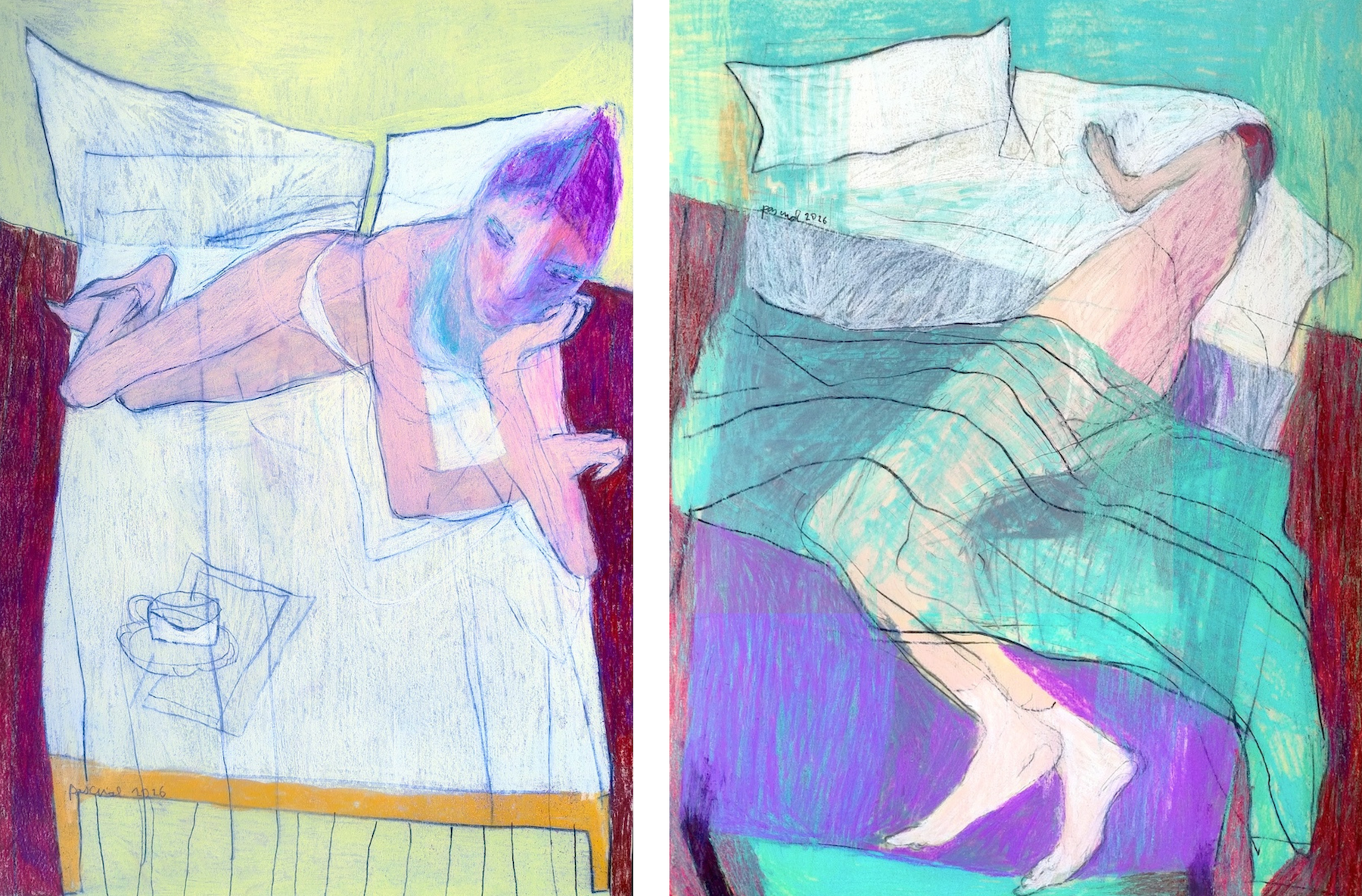
Figures in States of Transition | Figurative Drawings by Alex Pascual
My work explores the relationship between the human figure, memory and domestic interior spaces.
Working primarily with coloured pencil, I create contemporary figurative drawings that explore everyday life, emotional memory and the quiet psychological tension hidden within ordinary situations. Bedrooms, kitchens, chairs, clothing and familiar objects are never simply backgrounds; they become spaces where memories, emotions and personal experiences quietly accumulate.
The Human Figure and Domestic Space
The human figure lies at the centre of my practice. What draws me is the expressive potential of the body — how a gesture, a posture or a subtle movement can communicate emotions that words often cannot. Although my drawings frequently depict female figures, they are not portraits in the traditional sense. Instead, they become anonymous presences suspended somewhere between appearance and disappearance: resting, waiting, thinking or simply existing within their surroundings.
Many drawings begin with observation, often during life-drawing sessions, before gradually moving away from direct representation. What happens next is what interests me most: reality passes through memory, proportions shift, perspectives bend, and colour responds to emotion rather than observation.
Memory, Distortion and Ambiguity
Distortion is not an aesthetic choice for its own sake. It reflects the way memory itself operates: unstable, fragmented and constantly reshaping our perception of the past. Rather than documenting reality, I try to reconstruct how places, people and moments are emotionally remembered.
Ambiguity plays an essential role in this process too. I avoid explaining every narrative or offering a fixed interpretation, and prefer images where something remains unresolved, letting the viewer enter the drawing through their own memories and emotional associations. The image becomes more alive when it leaves space for uncertainty.
A Personal Visual Diary
Living in Barcelona, Dublin, London, Glasgow and now Copenhagen has gradually shaped my visual language. Each city, home and domestic interior has become part of an ongoing visual diary that continues to evolve over time. Drawing allows me to preserve fragments of lived experience while transforming them into something less literal and more psychological.
Artists and filmmakers who find meaning in ordinary moments and quiet situations have deeply influenced the emotional tone of my own work — their attention to atmosphere, restraint and ambiguity in particular. Rather than searching for dramatic narratives, I look for the subtle tensions that exist beneath everyday life.
Why Coloured Pencil?
Working with coloured pencil allows me to embrace slowness, intimacy and uncertainty. The medium encourages hesitation rather than certainty, making each line part of an ongoing search rather than a definitive statement.
Using simple materials — paper, coloured pencil and acrylic — I try to create images where everyday life becomes quietly psychological, emotionally ambiguous and open to interpretation. My intention is not to reproduce reality, but to create drawings that feel remembered rather than observed.
If you enjoyed this essay, you may also like:
You can also explore more original drawings in the Artworkand Shop sections.
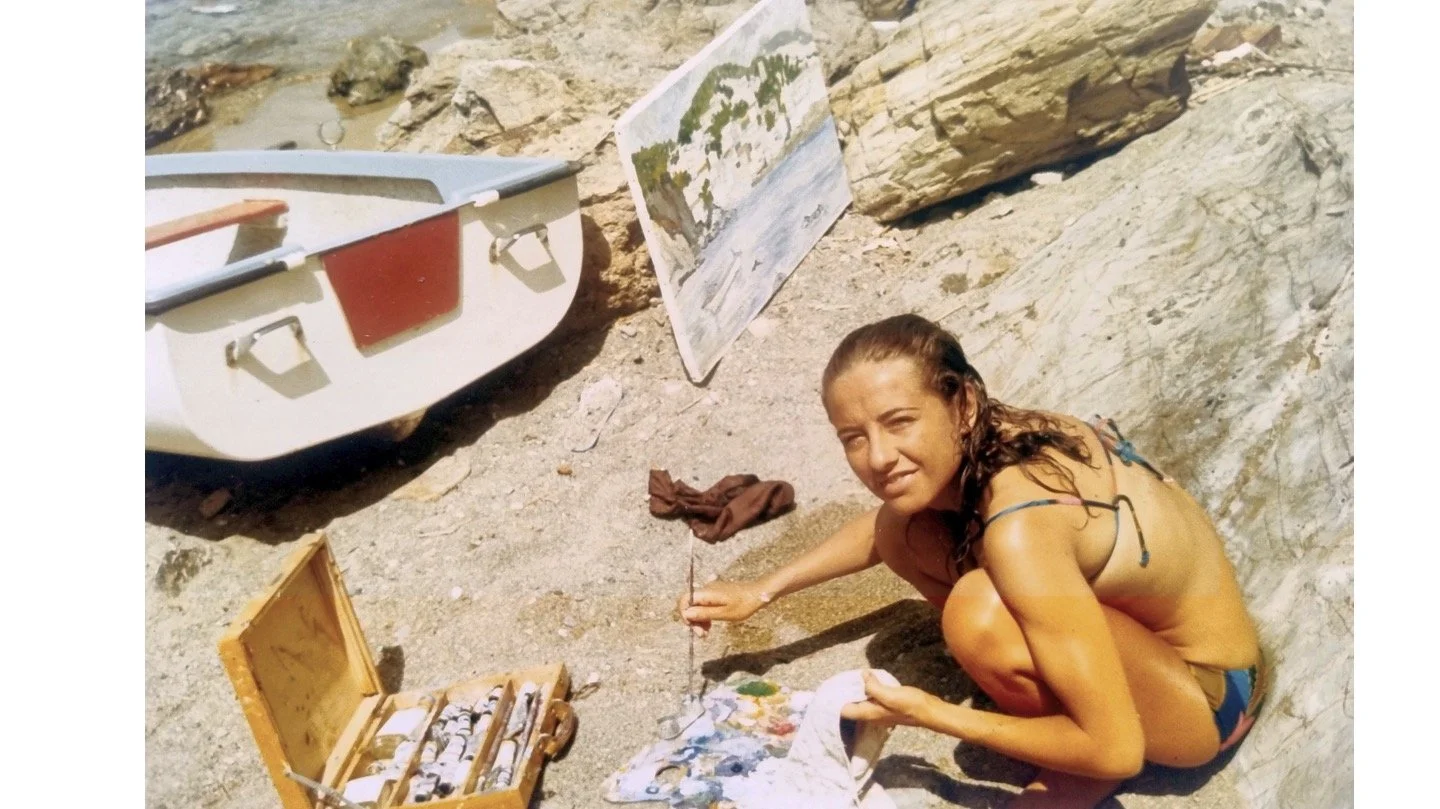
My mother. Sa Tuna, Costa Brava, 1974.
She belonged to the Mediterranean—
to salt on sun-warmed skin,
to quiet harbours and endless summers,
to the freedom of the sea.I love you, Mum.
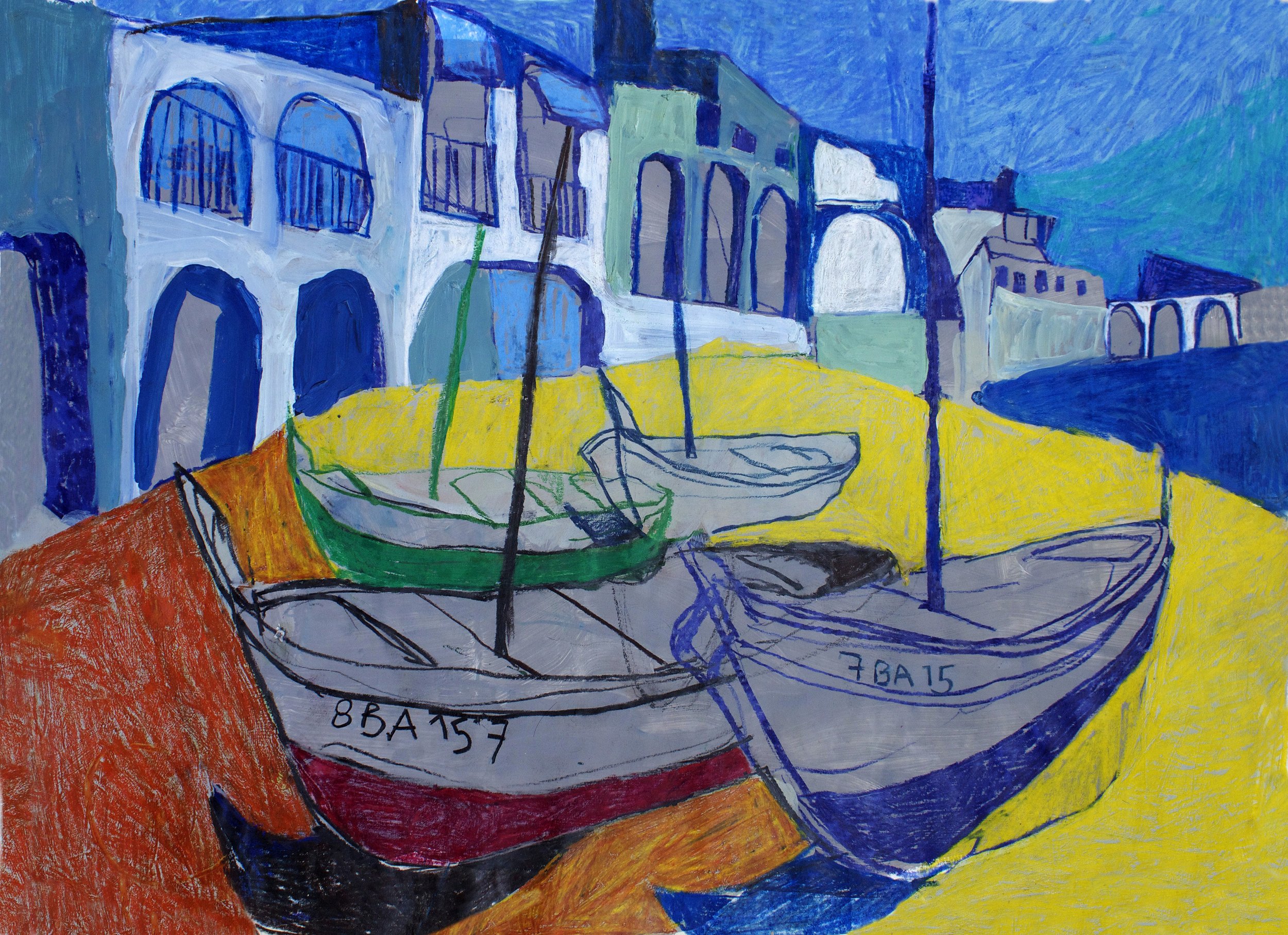
Mediterranean Childhood Memories: Port de la Selva, Costa Brava and the Origins of My Visual Language
When I think of the Mediterranean, I don't think of paintings or landscapes first. I think of being a child, spending endless hours outdoors, exploring without any particular purpose.
I grew up spending summers between places like Port de la Selva, Cala Tamariua and Sa Tuna in Begur. Those places are still tied to my earliest memories: the rocks, the smell of the sea, the intense heat, the feeling of having an entire world to discover.
I could spend hours alone along the coastline, fascinated by the rocks and everything hidden around them — small caves, fish, crabs, sea plants, the changing shapes of the landscape. I loved climbing and jumping from the rocks into the water, swimming down into the green, transparent sea below. From above, it looked so clear I could see the bottom before I even jumped.
Most days I'd take out my own small inflatable boat, imagining adventures along the coast. Sometimes the waves would splash a little water over the side, and I'd bail it out with a bucket before carrying on. I loved drifting towards places that felt completely unknown. One day the wind pushed me much further out than I expected, and I couldn't get back on my own. Eventually, some fishermen found me and brought me safely home.
The rest of those summers were made up of simpler things: building sandcastles, walking barefoot across the beach, lying on sun-warmed rocks, swimming for hours and coming home exhausted after a whole day outside. My skin was always dark from the sun, and summer felt as though it would never end.
At the time, I had no idea any of this would later shape my work as an artist. I wasn't thinking about drawing or painting — I was just observing, exploring, absorbing everything around me.
It was only years later, after living in cities like Dublin, London, Glasgow and Copenhagen, that I realised how much those early experiences had stayed with me. The intensity of the light, my relationship with colour, the way memory transforms a place — these have become central to how I draw.
I'm not interested in recreating those places as they were. Memory doesn't work like a photograph; it exaggerates, selects, leaves things behind. My coloured pencil drawings work the same way — reality passed through distortion, colour and imagination rather than reproduced.
The Mediterranean is still present in my work, not as a subject to represent, but as a way of experiencing the world: through light, colour, atmosphere, and the emotional traces a place leaves behind.
If you enjoyed this essay, you may also like:
You can also explore more original drawings in the Artwork and Shop sections.
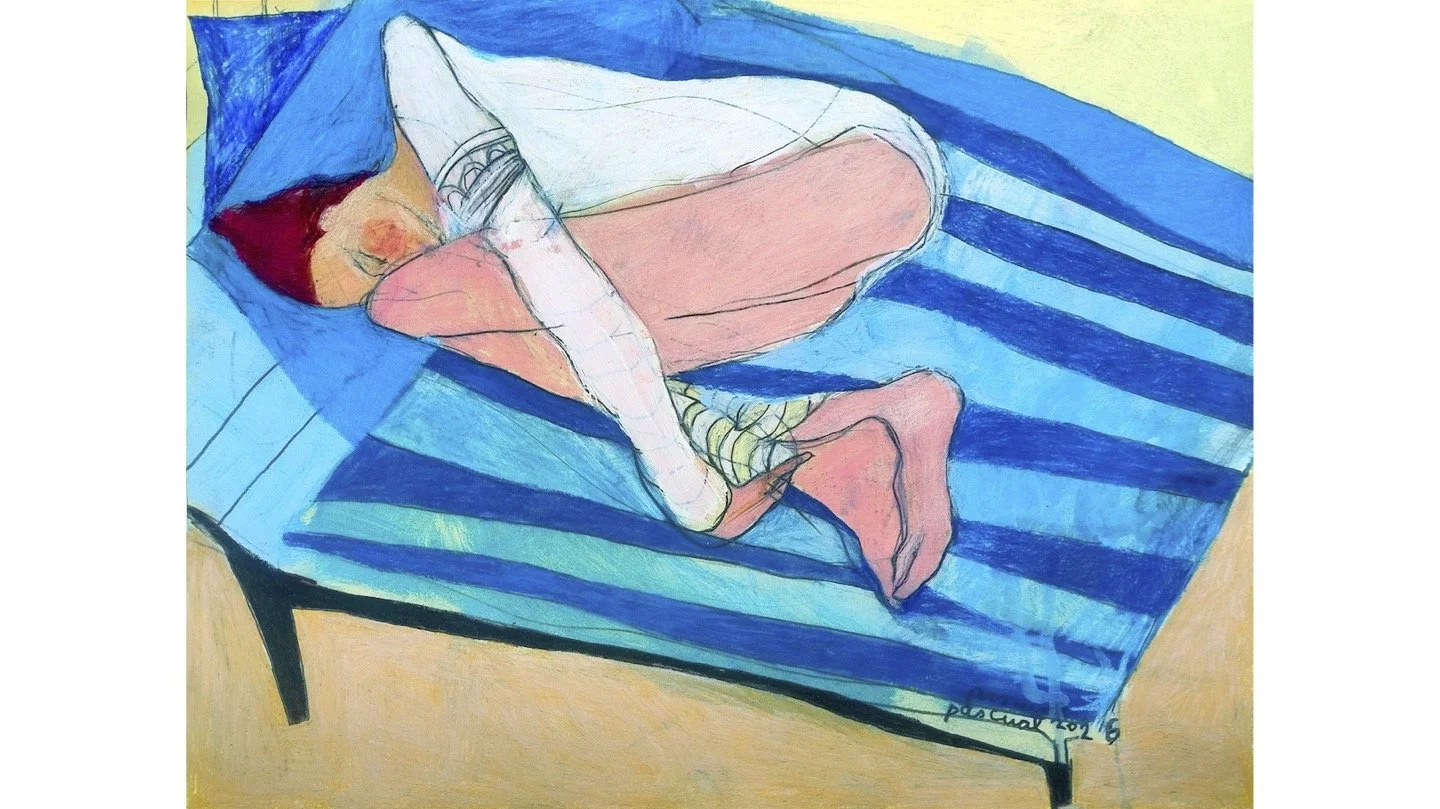
Folding Into Blue
Some drawings arrive quickly. Others take years to understand.
Folding Into Blue began during a life drawing session while I was living in Glasgow. At the time, it was simply one drawing among many — a quick response to a model resting on a striped bed. At the end of the session, I filed it away with dozens of other life drawings, and for almost three years I barely thought about it again.
Only after moving to Copenhagen did I return to it. By then, enough time had passed for me to stop looking at it as a life drawing and start seeing it as something else entirely.
From Observation to Memory
When I first looked at the drawing again, it wasn't the figure that caught my attention. It was the space surrounding her.
The bed no longer behaved like a real bed. Its perspective bent, the mattress seemed to tilt, and the blue stripes slowly stopped feeling like fabric. They became more like an emotional atmosphere surrounding the body.
That shift happened while I was working, almost without my noticing it. I wasn't interested in correcting the drawing or making it more realistic. Instead, I wanted the room itself to respond to the figure's emotional state, allowing the space to become psychological rather than merely descriptive.
Like many of my drawings, what had begun as observation slowly passed through memory. The original pose remained, but everything around it started to change.
Blue as Emotional Space
The curled posture became, over time, the emotional centre of the drawing.
There is something deeply human about the instinct to fold into ourselves. It can suggest protection, exhaustion, intimacy or withdrawal, sometimes all at once. The figure hides from the viewer while simultaneously revealing vulnerability. That contradiction interested me far more than any literal narrative.
Blue also crept in on its own. It wasn't something I consciously planned from the beginning. As I kept working, the colour took over the drawing bit by bit until it felt less like colour and more like atmosphere.
It is not a peaceful blue. It carries silence, distance, memory and introspection. Against it, the warmth of the skin feels fragile, almost dissolving into the surrounding space.
A Drawing That Needed Time
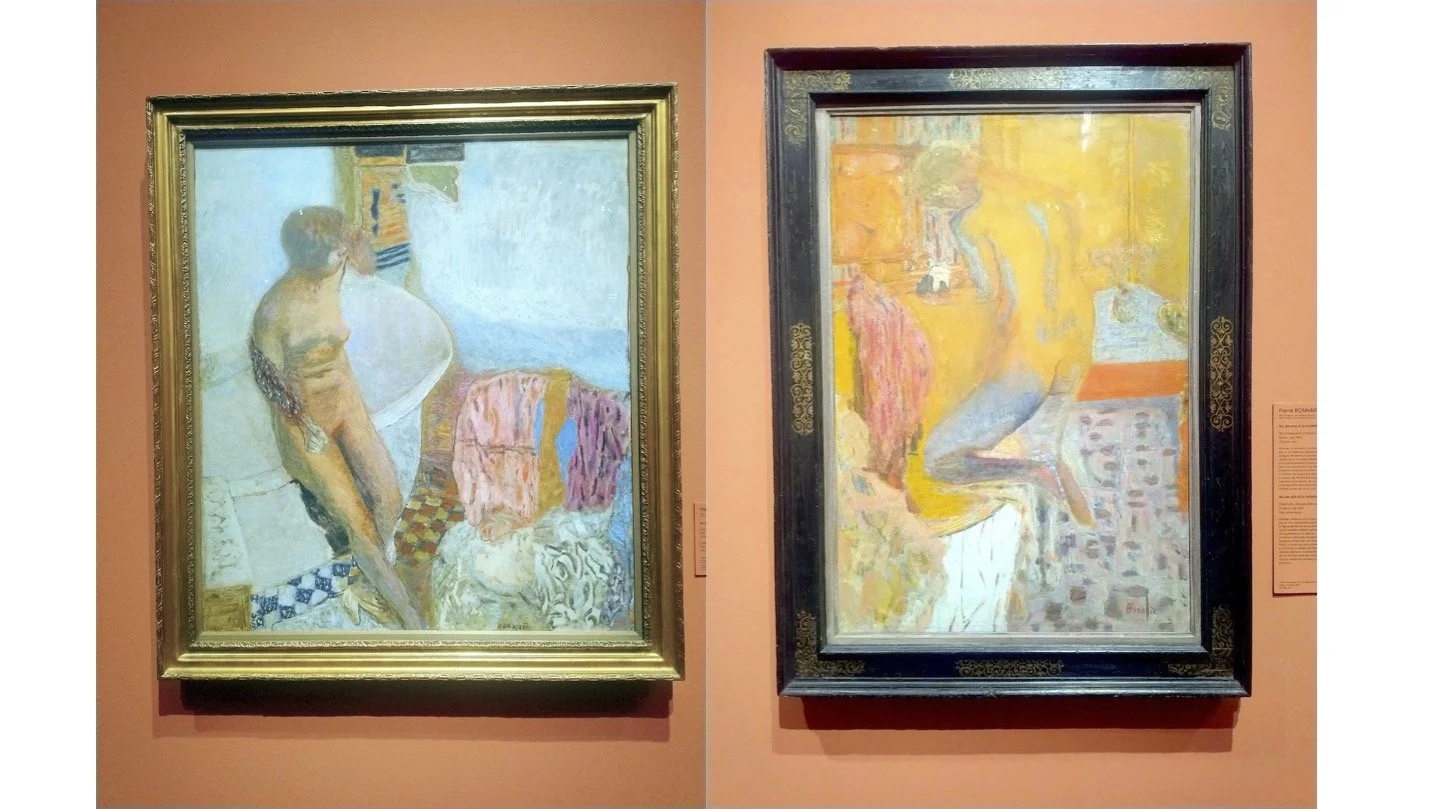
Years later, while visiting the Matisse exhibition in Barcelona, I found myself returning again and again to two paintings by Pierre Bonnard. Long after leaving the museum, those quiet domestic interiors stayed with me.
What fascinates me about Bonnard is not simply his use of colour, but the way ordinary rooms become emotional spaces. Perspective slips almost unnoticed, colour carries psychological weight, and everyday life becomes quietly strange.
Looking back, I realised that Folding Into Blue was searching for something similar, although through my own visual language.
I don't think this drawing could have been finished in Glasgow. It needed those years of distance. Sometimes a drawing has to wait until you've changed enough to understand what it was trying to become.
What began as a quick life drawing slowly transformed into something much more personal: a reflection on withdrawal, tenderness, solitude and the strange comfort of disappearing into colour.
Further Reading
If you enjoyed reading about the making of Folding Into Blue, you may also like:
You can also explore more original drawings in the Artwork, Shop, and About sections.
Between Presence and Disappearance: Encountering Bonnard in Barcelona
A few days ago, I visited the Henri Matisse exhibition at CaixaForum Barcelona. Although I went there to see Matisse, I unexpectedly found myself returning again and again to two paintings by Pierre Bonnard. They stayed with me long after I had left the museum.
Bonnard and the Fragility of Presence
What moved me was the way Bonnard transformed intimacy into something almost psychological. His figures seem to dissolve into the surrounding atmosphere; flesh, fabric and light merge softly, as if the paintings were constructed from memory rather than direct observation. Nothing feels entirely fixed. Everything seems suspended between presence and disappearance.
Before leaving the exhibition, I found myself standing in front of the same two paintings once again, trying to understand why they felt so familiar. It was not only their colour or composition, but the quiet emotional atmosphere they created — something I kept thinking about for days afterwards.
Bonnard's relationship with Marthe, his wife and lifelong muse, deeply shaped his work. He painted her obsessively for decades — bathing, resting, turning away, inhabiting domestic interiors charged with tenderness, distance and solitude. Marthe became far more than a subject; she became inseparable from Bonnard's visual universe and emotional language.
Painting from Memory Rather Than Observation
Standing in front of these paintings, I realised how deeply Bonnard has influenced my own practice. Much of my work also revolves around fragments, quiet atmospheres and moments that feel remembered rather than fully observed. I am drawn to images in which emotion emerges through silence, gesture and light rather than through narrative.
Leaving the museum, I realised that what continues to inspire me is not only Bonnard's use of colour, but his ability to make ordinary moments feel quietly unforgettable. His paintings do not shout; they linger in your memory. It is something I continue searching for in my own drawings.
If you enjoyed this essay, you may also like:
You can also explore more original drawings in the Artwork and Shop sections.
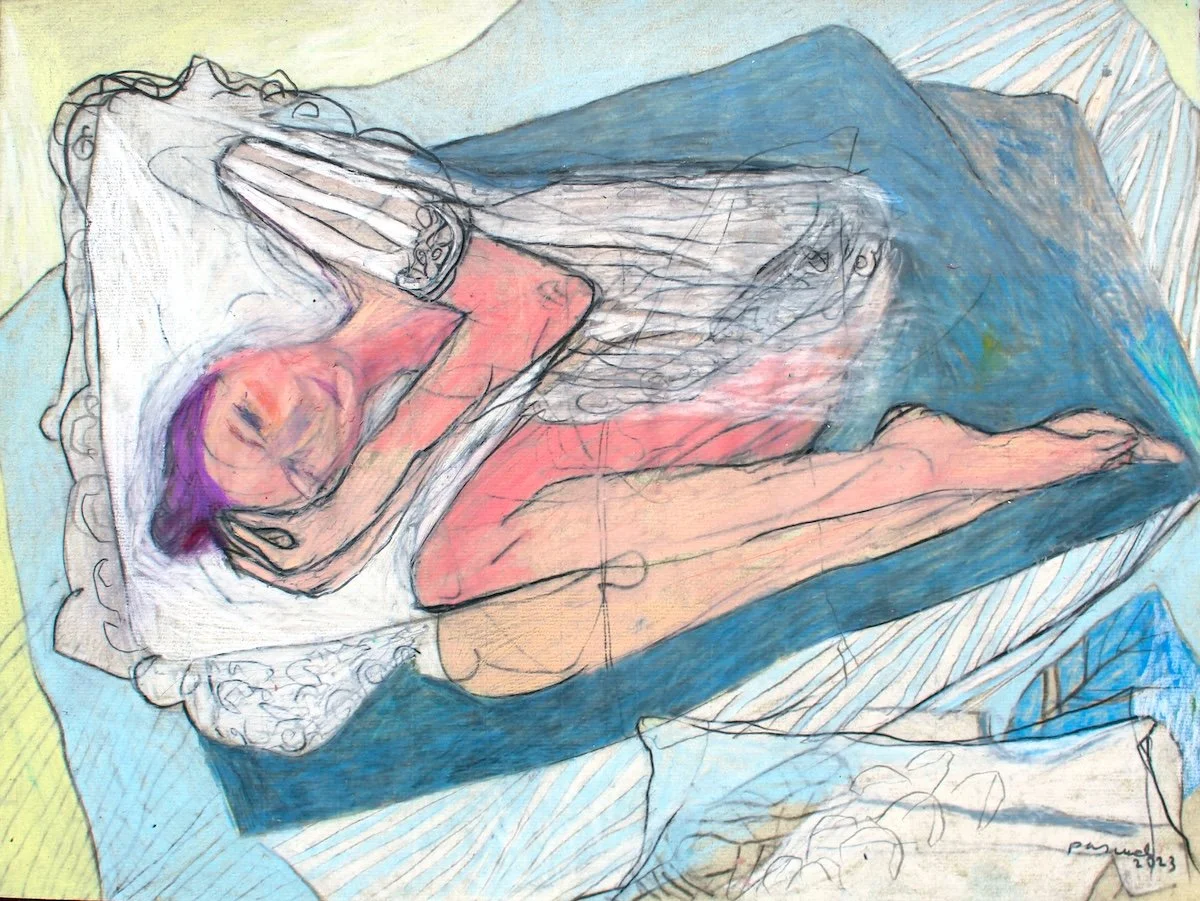
Fragments of Rest
Drawing sold recently through Galerie Heike Arndt Berlin.
This drawing was made during a life-drawing session in Holborn, London, in 2023. Recently, it found a new home through Galerie Heike Arndt Berlin. Seeing it leave my studio made me think again about the quiet, unexpected life a drawing begins once it leaves the artist's hands.
Drawing the Quiet Moments
What has stayed with me about this piece is the atmosphere that emerged almost unexpectedly while I was drawing. The model's pose — folded inward, with the body curling gently into itself — immediately suggested both rest and vulnerability. It felt as though the figure was slowly disappearing into the surrounding fabrics and space.
I worked quickly and instinctively, allowing fragments, unfinished areas and overlapping lines to remain visible. I never wanted the drawing to feel overly resolved. Those broken edges and transparent layers are, for me, what keep an image alive. They preserve the energy of the moment — the concentration, the silence of the room, and the stillness of the model.
The soft blues, pale pinks and washed-out whites gradually created an atmosphere I had not consciously planned. The drawing slowly moved beyond observation and became something closer to memory. Even now, looking at it feels less like seeing an image than remembering an experience.
When a Drawing Begins a New Life
One of the things I find most fascinating about drawing is that so much emotional intensity can become contained within a single sheet of paper. Once finished, the work often disappears into storage, a collector's home or a gallery, carrying with it the atmosphere of the moment in which it was made.
Years may pass without seeing it again. Then, unexpectedly, the drawing reappears — not physically, but through the knowledge that it has connected with someone else.
Selling this piece recently reminded me of that quiet transformation. A drawing made during an ordinary afternoon in London now belongs to another life, another home and another story. Yet somehow, it still carries the same fragments of memory, atmosphere and emotion that first emerged in the studio.
If you enjoyed this essay, you may also like:
You can also explore more original drawings in the Artwork and Shop sections.
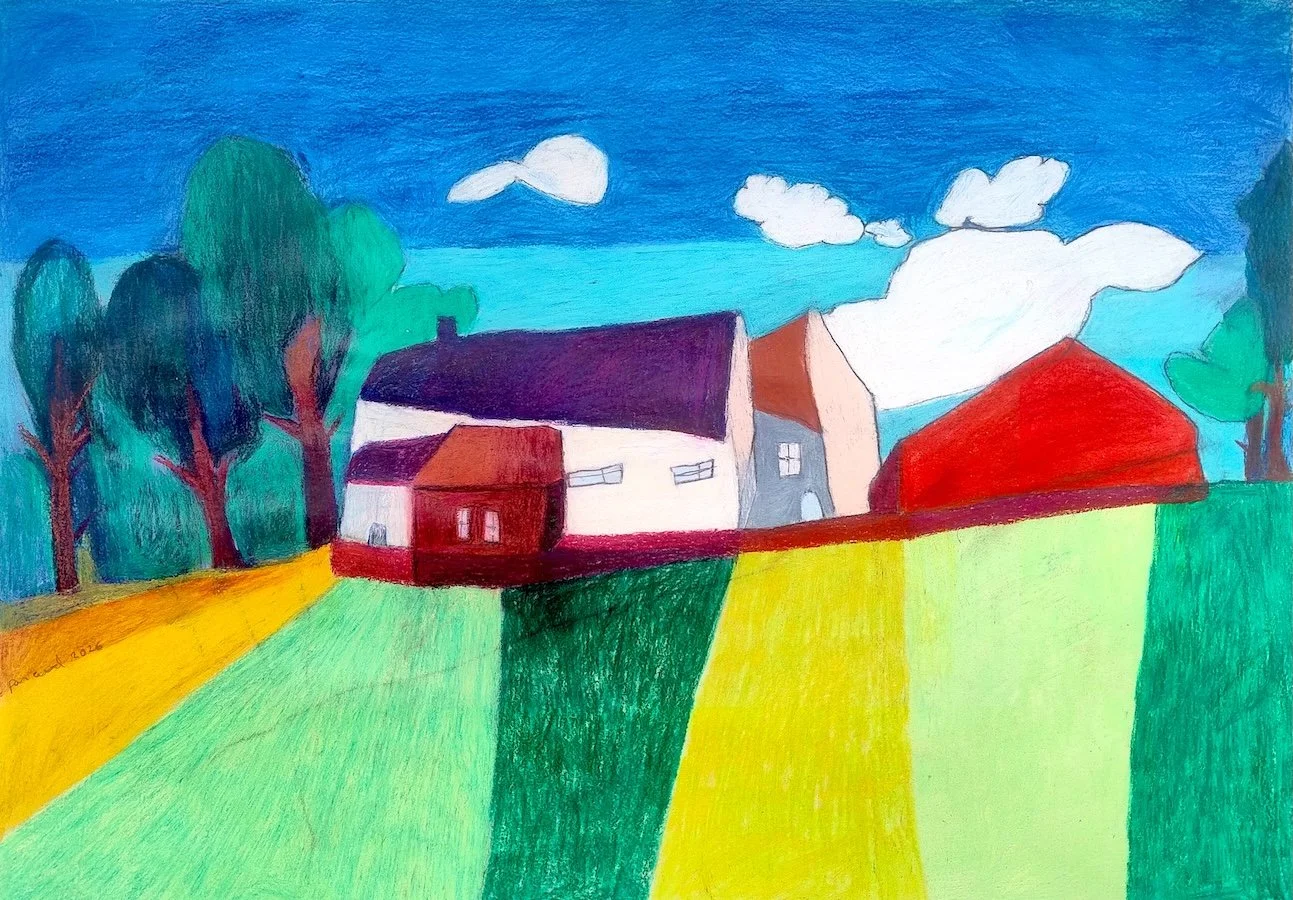
When the Familiar Becomes Strange
There is something deeply familiar about the landscape: a house, trees, fields, clouds drifting across the sky. At first glance, the scene appears calm, almost idyllic. Yet beneath this apparent simplicity, another atmosphere slowly emerges — one of silence, distance, and subtle psychological tension.
Landscape as Emotional Space
This landscape stayed with me for a long time. I passed it almost every day on the train between Copenhagen and Hyllie in Malmö, often finding myself looking out at its quiet fields, isolated buildings and unmistakable Scandinavian sense of calm. Eventually, back at home, I decided to draw it from memory, as I usually do.
In this drawing, I am less interested in representing a real location than in creating an emotional space. Memory softens certain details, exaggerates others, and gradually transforms familiar places into something quieter and more ambiguous. The familiar landscape begins to feel subtly out of balance. Perspective becomes uncertain, colours intensify, and the emptiness surrounding the buildings creates a sense of isolation rather than comfort. The landscape exists somewhere between memory and dream.
Although these works differ from my drawings of female figures and domestic interiors, they are deeply connected. In both cases, I explore the quiet strangeness hidden within everyday life. A room, a body, or a rural landscape can all become psychologically charged spaces. What interests me is not narrative, but atmosphere — the ambiguous sensation that something cannot be fully explained.
The Role of Minimalism
Minimalism plays an important role in this process. Simplified forms, broad areas of colour, and reduced detail create a sense of stillness, but also emotional distance. The empty fields and silent buildings become emotional structures rather than descriptive elements. The absence of people does not remove the human presence; instead, it intensifies it through solitude and suggestion.
I return, again and again, to moments when reality feels slightly displaced — when the ordinary becomes strange without losing its familiarity. These landscapes are not escapes from reality, but quiet reinterpretations of it: spaces suspended between calmness and unease, intimacy and isolation.
If you enjoyed this essay, you may also like:
You can also explore more original drawings in the Artwork and Shop sections.
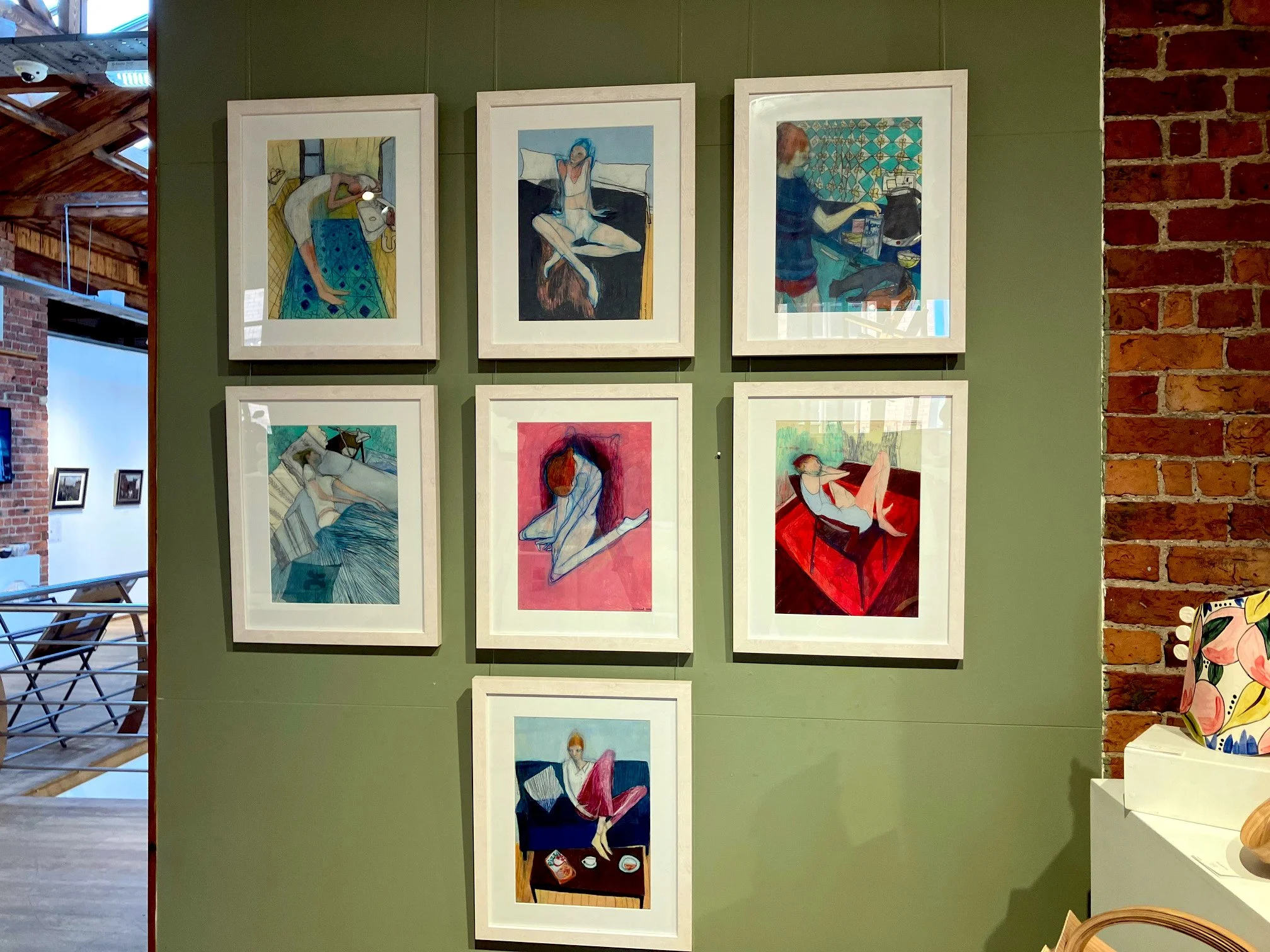
Showing seven drawings at The Biscuit Factory in Newcastle
27 November 2025
Returning to The Biscuit Factory in Newcastle gave me the opportunity to present seven recent coloured pencil drawings developed after moving to Copenhagen. Although each drawing began with direct observation, they gradually evolved through memory, becoming quieter, more fragmented and emotionally open.
My drawing process usually starts with quick sketches made during life drawing sessions. Most remain unfinished studies, but occasionally a particular gesture, pose or atmosphere stays with me. Back in the studio, those initial lines become the starting point for something less descriptive and more personal.
Rather than documenting a specific moment, I allow memory to reshape what I have observed. New lines appear, colours gradually build in transparent layers and the composition changes until the drawing finds its own balance. I think of drawing as a process where forms move, disappear and slowly settle into place.
The seven works presented at The Biscuit Factory explore domestic interiors, female figures and the quiet emotional narratives that emerge from everyday life. Rather than offering fixed stories, they invite viewers to complete the images through their own memories and associations.
The Biscuit Factory, Newcastle
Trinity Buoy Wharf Drawing Prize 2023
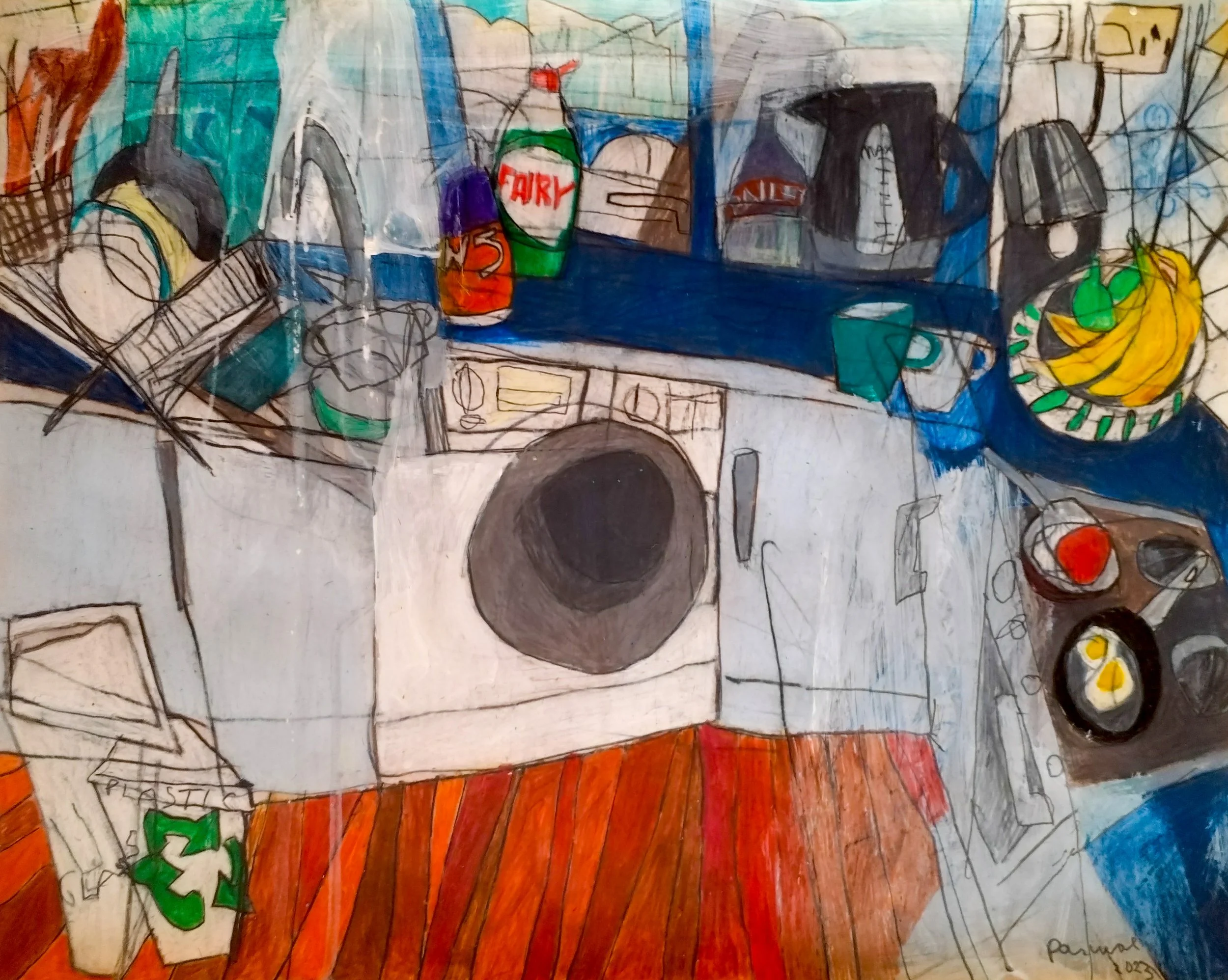
Messy Kitchen in Glasgow (2023), coloured pencil drawing by contemporary figurative artist Alex Pascual, selected for the Trinity Buoy Wharf Drawing Prize.
The Trinity Buoy Wharf Drawing Prize is one of the UK's most respected exhibitions dedicated to contemporary drawing. I was pleased to be selected once again, presenting Messy Kitchen in Glasgow (2023), following the inclusion of Staircase in North London in the 2021 edition.
Although both drawings were made in different homes and at different moments in my life, they share the same interest in domestic interiors as places where memory and everyday experience quietly accumulate. Long after leaving those spaces behind, the drawings remain as visual records of places that continue to exist through memory rather than direct observation.
Working from observation and memory has become a central part of my practice. Rather than documenting a specific location, I am interested in how familiar environments gradually become emotionally transformed through the act of drawing.
The Trinity Buoy Wharf Drawing Prize continues to celebrate the diversity of contemporary drawing, bringing together artists working across a wide range of approaches and techniques.